Role
Concept, build & system — Jasper Veldkamp (Lysergic)
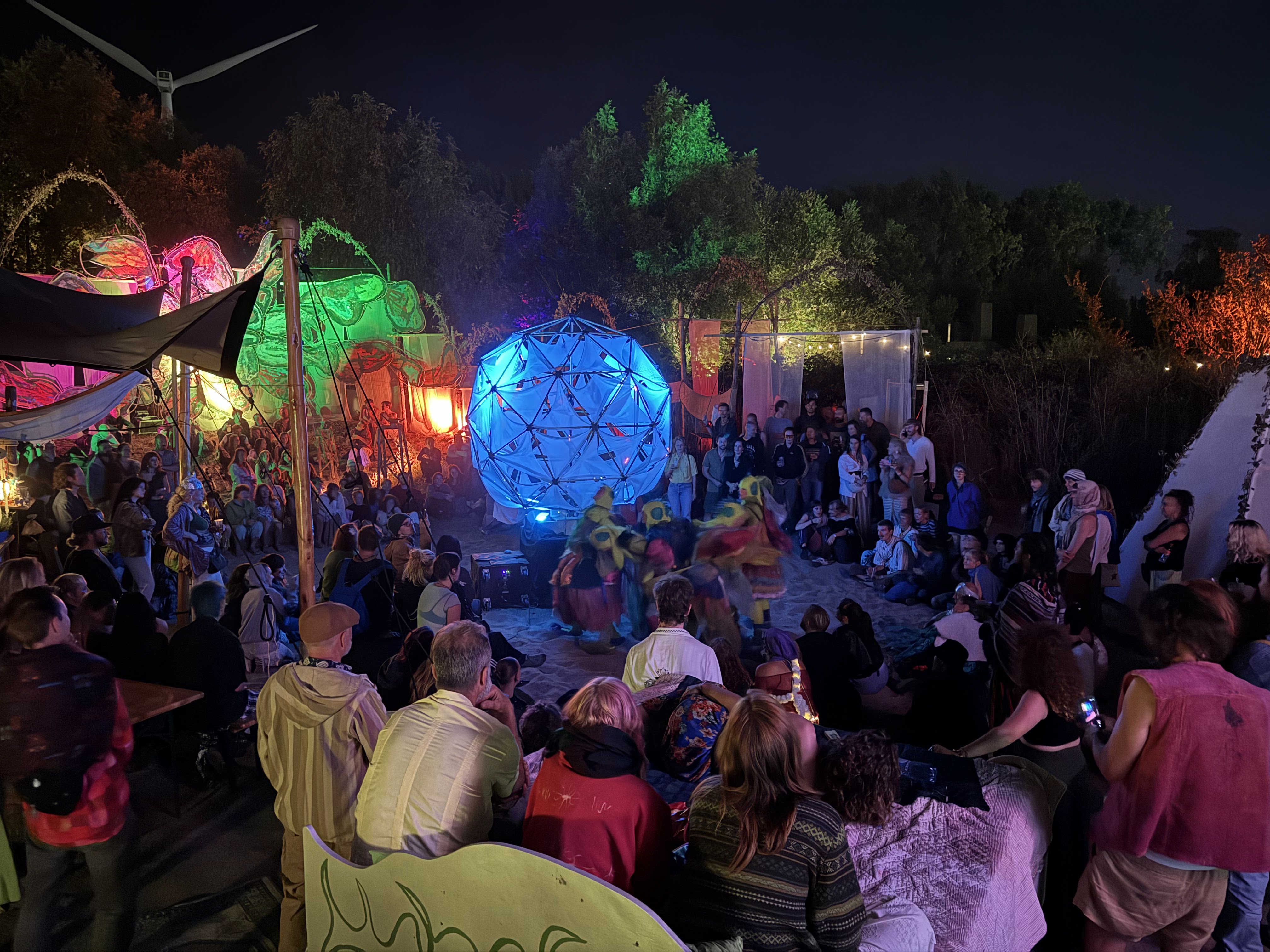
A sun that needs a circle of dancers to wake.
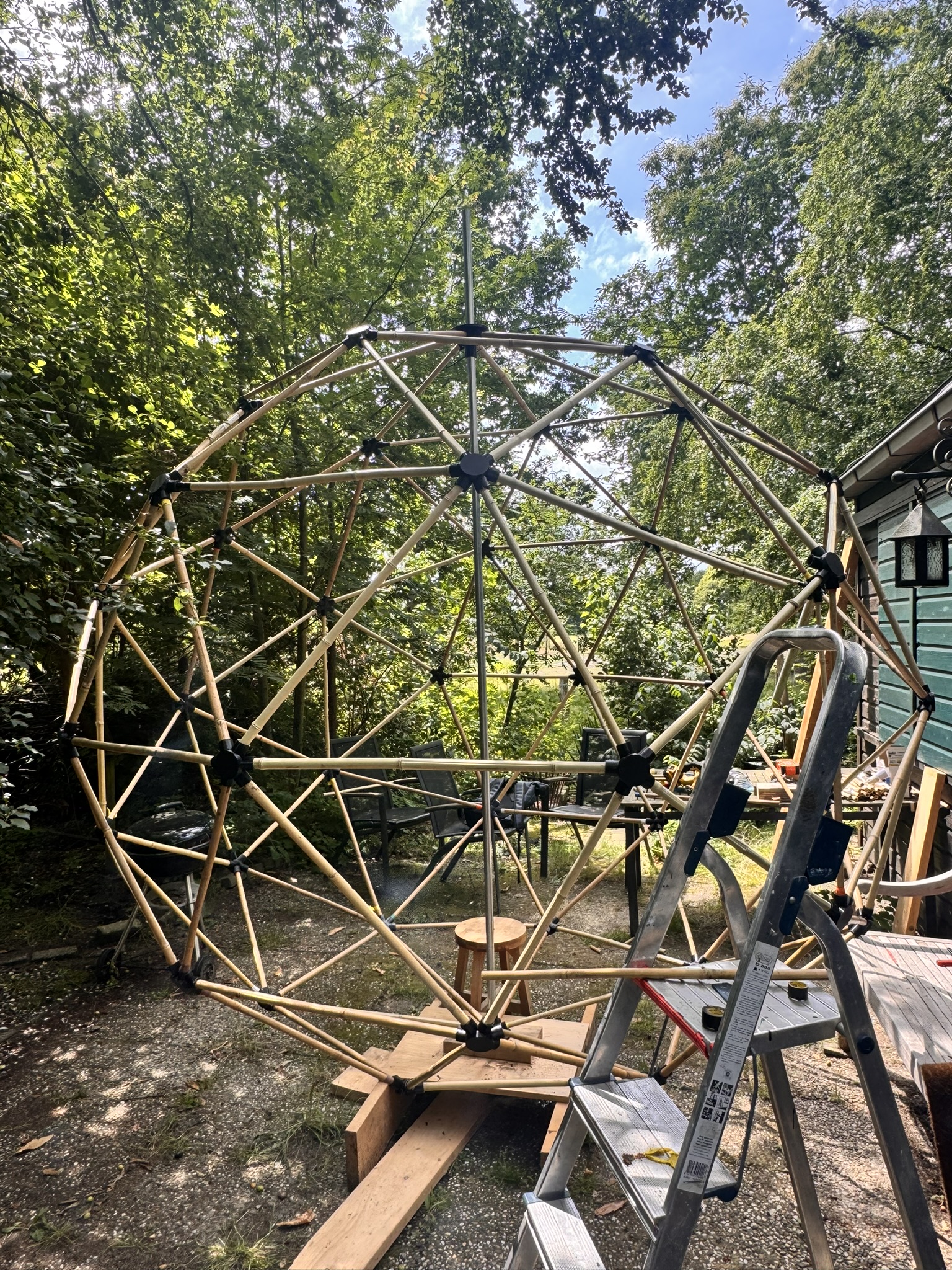
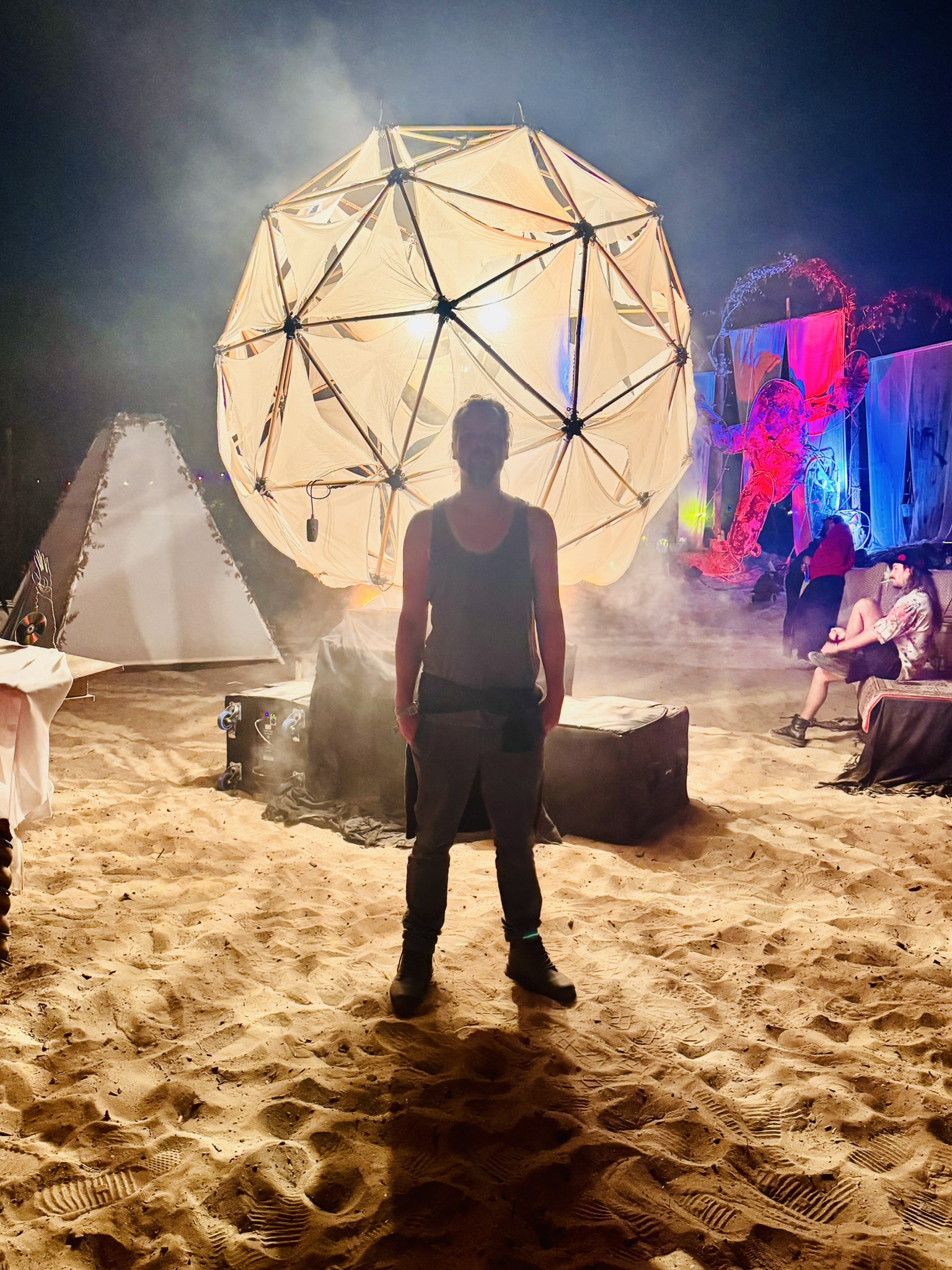
A two-metre sphere of hand-cut bamboo stands on the sand, skinned in stretched fabric. It breathes slowly — red, almost asleep, visible across the field. It only wakes when people gather and dance around it. There is no button, no screen, no instruction card. To turn Sól on, a crowd has to become a circle.
Two infrared cameras read the shape of that motion and feed it into a live TouchDesigner patch. The more the circle moves together, the further Sól climbs out of sleep — from a dim red pulse toward a warm white sun burning through the haze. Stop dancing, and it slips back under. The crowd is the switch, the dimmer and the score all at once.
Sól has no on/off. It has moods — a slow gradient the crowd walks it through and back again, all night, for each new group that forms.
"The ritual is the instruction manual. The instruction manual is the ritual."
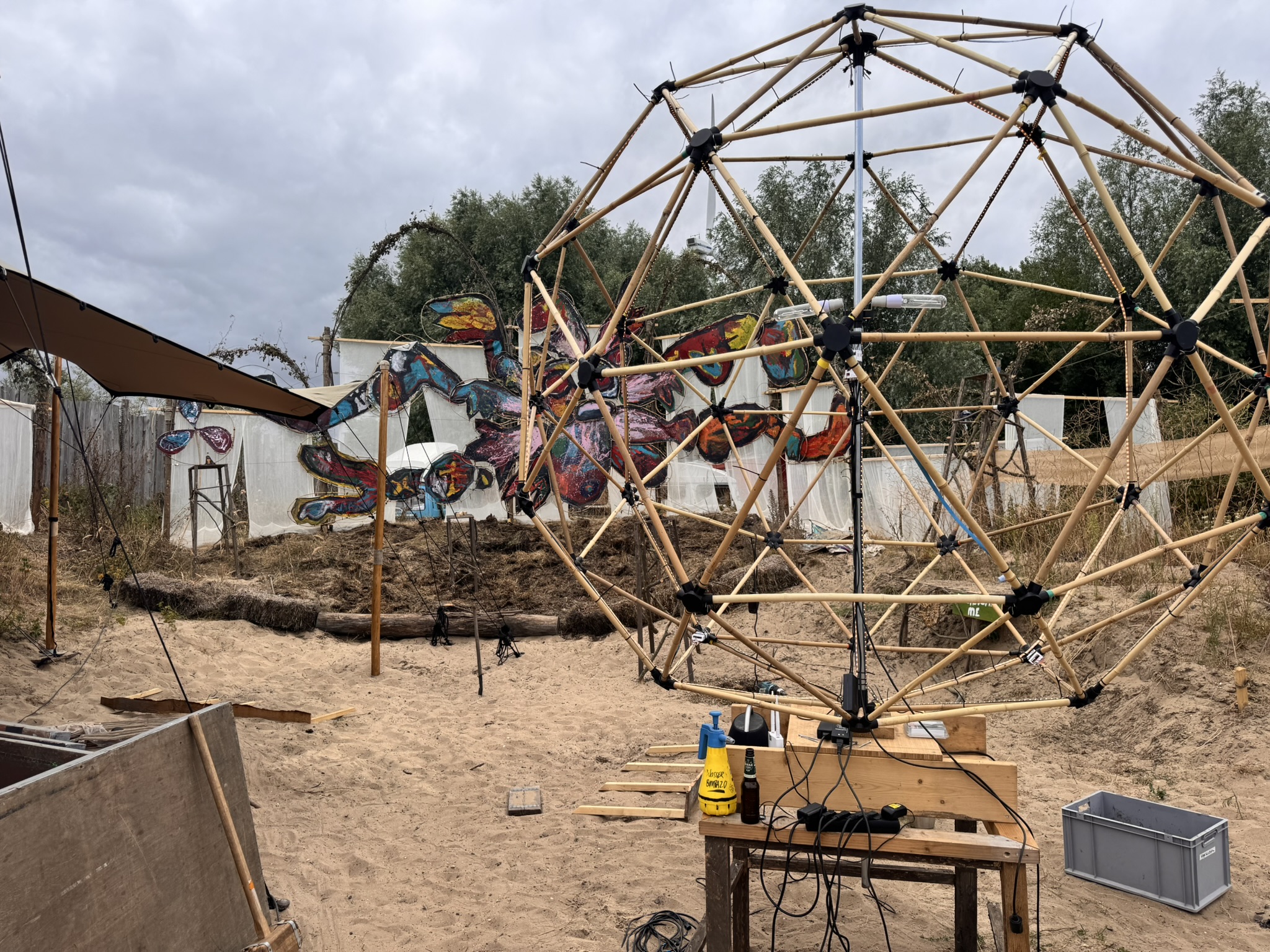
No cue list, no operator. The TouchDesigner project ran fully autonomous all weekend — motion field in, colour and intensity out — tuned on the sand between sets while people were still dancing around it.
Everything visible on that screen is what the crowd behind it is doing: the audience is the input.
Sól stood at the centre of the stage. The first dancers worked out the rule on their own — and then did something better: they recruited strangers to complete the circle. The ritual taught itself, group after group, all night.
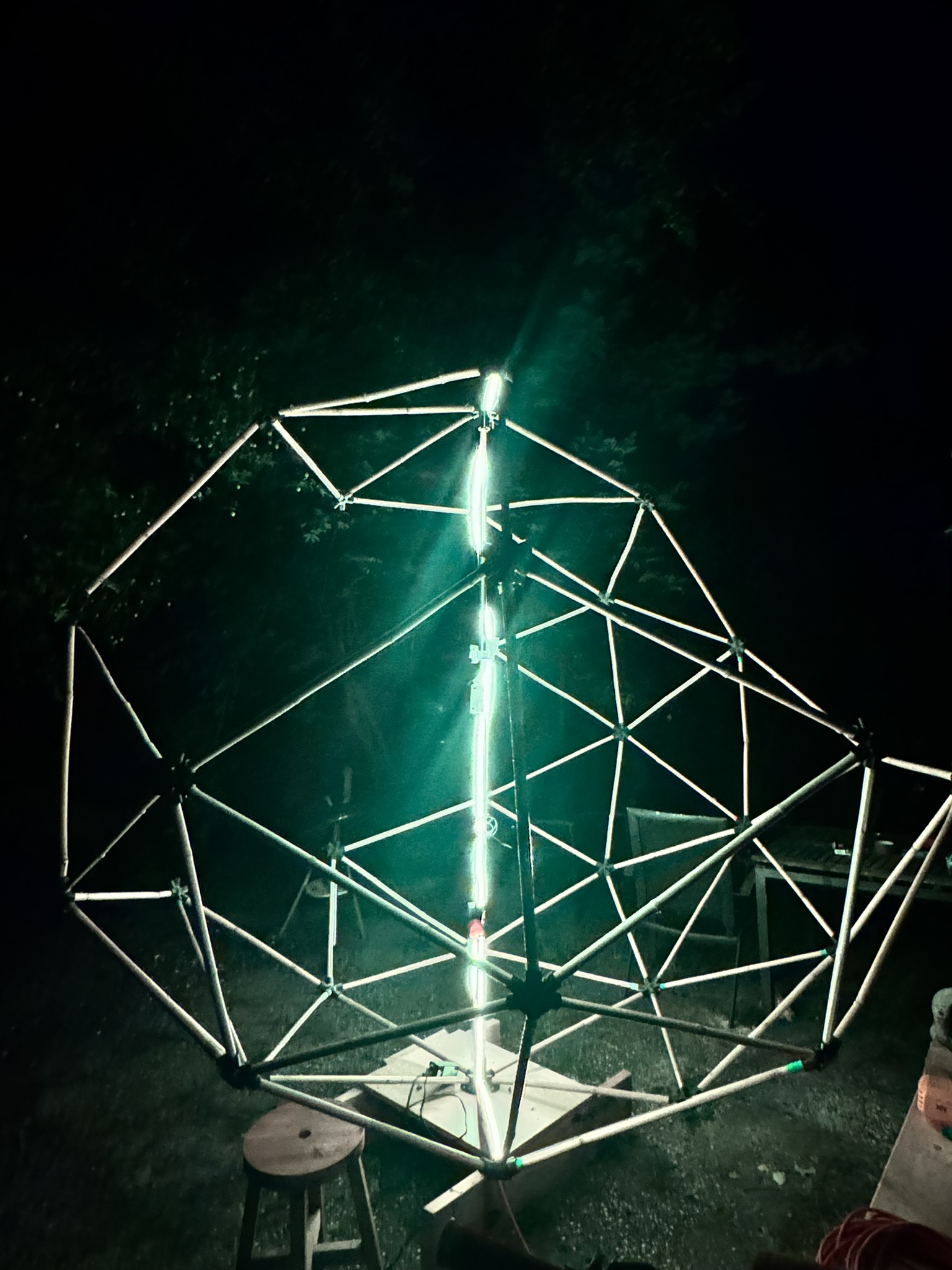
Between awakenings the orb never went fully dark. The audio-reactive LED core locked onto the DJs, so Sól kept breathing with the music — a sun keeping time with the stage it anchored.
Built and raised with the kikvors crew. Thank you, Landjuweel.
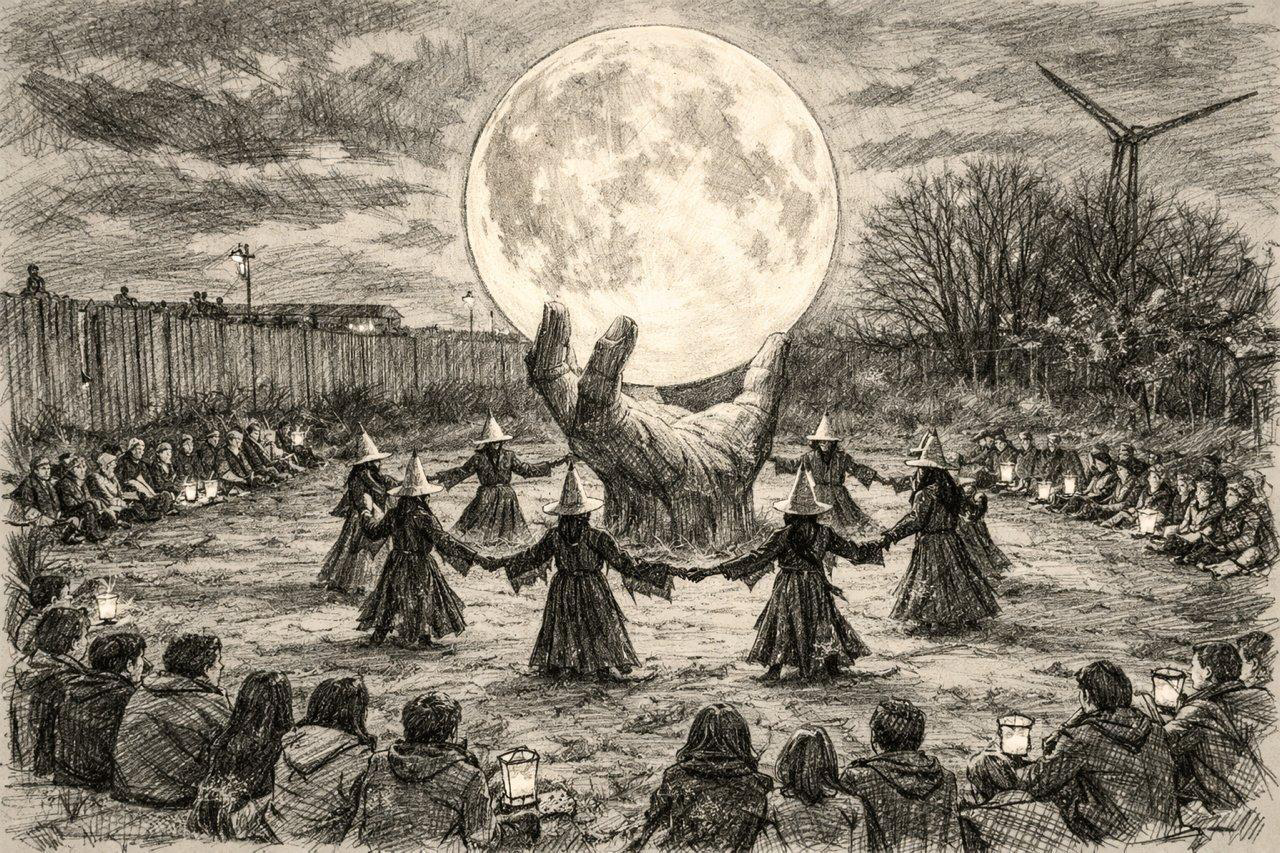
The original proposal put the orb in the palm of a three-metre wooden hand rising out of a sandy crater. The hand never got built — time, weight, a festival deadline. The orb went up alone, and it turned out it didn't need the hand: a sphere on the sand reads as a sun rather than a prop, and the ritual around it works the same.
Sól is one answer to one space. If you have a festival, a venue or a stranger idea, tell me the space and what you want people to feel inside it.
Request a project →